Behind the Scenes of The Bell Family

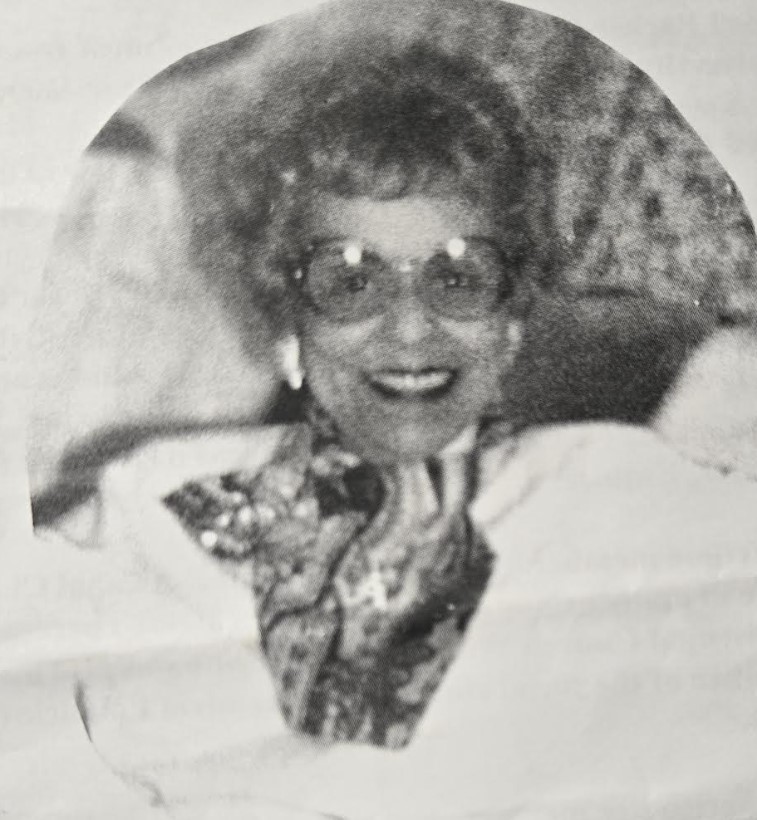
Freida Bell Brockington

In 2023, the Alexandria Library, Special Collection, and Local History hosted the first Alexandria African American Family Reunion. This event focused on increasing the library’s collection of pictures and artifacts of African Americans who once lived or are still living in Alexandria.

Many people contributed pictures at that event, and even a family Bible was given to the library. Through the collection of photographs, I met Freida Bell Brockington.

She donated pictures from her family, including pictures of her father. In a conversation with Freida, she told me that her father worked for the government but was also a photographer. I only knew one early well-known African American photographer who took pictures in Alexandria during the 1930s—1970s, Elrich W. Murphy.

Freida’s story stayed with me. I felt that her family history was a part of Alexandria’s history and needed to be told. An opportunity came to tell her story when I came across a 1922 article about a man who died in Alexandria delivering supplies for the Masonic Temple. This man’s name was John S. Bell. I called Freida and asked her whether she had a story in her family about the Masonic Temple. Immediately, she told me that her great-grandfather had something to do with the Masonic Temple. In addition, she told me that the last three generations on her paternal side were named John Bell, and each John had a different middle name and used their middle name as an initial. There was John J. Bell, her father; John A. Bell, her grandfather; and John S. Bell, her great-grandfather. That was enough information for me to research.

I researched Freida’s great-grandfather, John S. Bell, back to Winchester, VA. Her second great-grandfather, John Bell, was born in Winchester, VA, in 1845 and was listed on the 1860 Census as a free boy at 15. He was living in the household of his mother, Catharine Bell. There were also other children in the household besides John. These children were Emily, age 17; Martha, age 6; Queen, age 4; and Mary, age 1. They were John’s siblings.

If it weren’t for Freida’s participation in the Alexandria African American Family Reunion, where she donated pictures to the library, I would have never known she was connected to a man who took part in building the Alexandria Masonic Temple.

The 2025 Alexandria African American Family Reunion will be on September 6, 2025, at the Alexandria Barrett Library on Queen Street. Please attend and donate copies of your family’s pictures. It just might be a researcher like me who uncovers your family history.

On February 27, 2025, check out the second blog posting of the Bell family with an interview with John A. Bell’s grandson, Andrew “Andy” Evans.

Please read the Alexandria Gazette Newspaper titled, “The Ringing Success of the Bell Family: “A family’s historical connection to Alexandria and the Masonic Temple.” The article is on page 3, https://connectionarchives.com/PDF/2025/020525/Alexandria.pdf

A Love of Place – Mr. Ronald E. Burke

Ronald E. Burke loved Alexandria, Virginia, where he had deep roots. His father shared many stories of his childhood with Ronald, and Ronald spent many of his summers living with relatives in Alexandria. He shared his father’s stories with me about Alexandria and the relatives that he met. His voice became lively as he talked about his cousin, Harry Burke, and his great aunt, Sarah Nash Burke.

For a New Yorker, he identified himself as an Alexandrian. His father made sure that his children would always know that they were Alexandrians. Their vacations and holidays were spent in Alexandria with family and friends.

Ronald was born in New York. The parents migrated from Alexandria, Virginia, to New York, where Ronald and his brother Roscoe were born — other four siblings were born in Alexandria. His parents were Robert Webster Burke and Edith Russell Burke. His siblings were Robert Webster Burke, Jr., Lillian Burke Maclin, Russell Hollinger Burke, Wendell Arthur Burke, and Roscoe Burke. All of them are deceased.

Ronald had an adventurous life. He spent twenty years in the civil rights movement with the Southern Christian Leadership Conference (SCLC) and Operation PUSH (People United to Save Humanity) in Illinois. He worked in manufacturing, allowing him to travel and live in Nigeria, West Africa, for three years. Before his wife, Annette Chin Burke’s, death, they had been married for about 68 years.

In his retirement, he and his wife moved to Charlotte, NC, to be close to their children, Ronald Burke Jr. and Robin Burke Winkfield, and their grandchildren, Ronald Burke III and Aundrea Burke.

Besides his career, he retired as a Baptist minister with forty years of service.

On December 27, 2024, Mr. Ronald E. Burke died. His life’s work overseas and in the civil rights movement are examples he left behind for us to learn from.

Insight into the Life of Freeman H.M. Murray

Freeman H M Murray

It was a cold winter day in 1950 when an elderly man was walking toward Washington and Oronoco Streets in Alexandria; suddenly, as he walked across the Street, he was hit by a car. He dies two days later. The driver was a 29-year-old medical doctor who failed to yield to a pedestrian. The doctor was fined $5.

Who was this elderly victim? The man was Freeman H. M. Murray, 90. He had accomplished a lot in his ninety years and contributed his life to help better his race.

Freeman H. M. Murray was born in Cleveland, Ohio, in 1860 and came to the Washington, D.C., area to attend Howard University. He studied chemistry, physics, and languages there, mastering five languages. In 1883, he was the first appointed Ohio Civil Service in the records and pension division of the War Department in Washington, DC. He settled in Alexandria, VA, and retired after thirty years of service.

Mr. Murray had a second act: He founded two weekly newspapers, the Alexandria Home News and the Washington Tribune Newspaper, and the Murray Brothers Printing Company at 920 U Street, NW, Washington, DC.

Besides running his printing business, he was a religious leader and the author of “Emancipation and the Freed Man in American Sculpture.” He was a teacher and head of the primary Sunday School of Roberts Chapel Methodist Church (now Roberts United Memorial Methodist Church) in Alexandria for half a century. He was an organizer and director of the Alexandria Dramatic Club and a former member of the Niagara Movement, a pioneer civil rights organization, which included W.E.B. Dubois.

At the time of Mr. Murray’s death, he had four children, two boys and two daughters, and he lived at 813 Princess Street. One of his sons took over his newspaper and printing business, and his daughter, Florence, was the author of “Negro Yearbook,” which was published in New York. His daughter Katherine, through his first wife, Laura Hamilton, married Earl M. Luckett in Alexandria, Virginia. His granddaughter, Raye N. Luckett Martin, grew up at 405 North Alfred Street. She attended and graduated in 1943 from Parker-Gray High School. She became one of the first minority professionals in the Alexandria Juvenile Court System.  

Raye Luckett Martin

Raye was a Probation Officer for twenty-five years in Alexandria, VA. Before her appointment with the City of Alexandria, she was a law clerk for Otto Tucker, Esquire. Otto was the brother of the famous Civil Rights Lawyer, Samuel Tucker.

Like her grandfather Freeman, Raye was devoted to her church. She was a lifetime member of the Meade Memorial Episcopal Church in Alexandria, and her grandfather was a member of Roberts Chapel Methodist Church for sixty-seven years before his death.

There are many lessons to learn from Freeman Murray and his children. When they retired, they worked hard and invented new careers. In death, Freeman still teaches us the value of having multiple survival skills. But his greatest lessons are religion and education.

©2024-Char McCargo Bah

“Importance of Knowing Your History”

The City of Alexandria, Virginia, celebrated the 10th Anniversary of the Freedmen’s Cemetery and its Descendants in a three-day celebration that started on September 6, 2024.

From 2008 to 2014, the City’s Genealogist researched and located descendants of the Freedmen Cemetery. In 2014, the City dedicated the Freedmen Cemetery Memorial, and hundreds of people, along with National Television coverage, brought National recognition to this Cemetery. Before the celebration, many descendants had no clue about their family history related to the Civil War.

Through research, the City gave the descendants a part of their history that they never knew. After they received the news that their family was buried at the Cemetery and that they had arrived in Alexandria after running away from enslavement, they cried as they processed the information. But once they went through that process, their shoulders became straighter, and they knew their ancestors’ strength and determination of wanting freedom at any cost.

Just like their ancestors, who came to Alexandria for Freedom, Alexandria invited their descendants back to honor their ancestors’ Freedom. But what was the back story of their ancestors? The article on this page, which was published in the “Soldiers’ Journal,” stated that over seven thousand runaway slaves who were called contrabands wanted to taste freedom. They were hardworking people who wanted the same things that other free people had freedom.  

In my book, “Alexandria’s Freedmen’s Cemetery: A Legacy of Freedom,” on page 77, I discuss a child, John Gaines, who was buried at the Freedmen Cemetery in 1864.

“In 1864, the month of July was extremely dry, with the water levels low, grass growing in the reservoir, the temperature very sultry and mosquitoes abounding. During this extremely hot weather, eight-year-old John Gaines was buried on July 28, 1864.”

John Gaines’ parents were among the seven thousand people mentioned in the article who came to Alexandria for Freedom. His descendants, Lillian Locklear Alston and Wanda Ellis took part in the 2014 Freedmen’s Cemetery Memorial Celebration, along with several hundred other descendants of people buried at the Freedmen’s Cemetery.

Everybody’s history is essential; we are the only living thing celebrating our past. If we do not study ourselves or create a study guide of our history and how we came about, then who else will focus on us? For the descendants of the Freedmen Cemetery, they had Alexandria, who gave them the most precious thing a human being can have, which is a piece of their history!

If you want to read additional stories and learn more about the Freedmen Cemetery, you can find the book, “Alexandria’s Freedmen’s Cemetery: A Legacy of Freedom,” by Char McCargo Bah at amazon.com. Also, you can visit Alexandria and stop by the Freedmen Cemetery and the Alexandria Black History Museum.

©2024-Char McCargo Bah