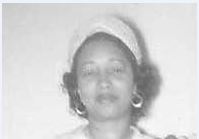
Insight into the Life of Freeman H.M. Murray

Freeman H M Murray

It was a cold winter day in 1950 when an elderly man was walking toward Washington and Oronoco Streets in Alexandria; suddenly, as he walked across the Street, he was hit by a car. He dies two days later. The driver was a 29-year-old medical doctor who failed to yield to a pedestrian. The doctor was fined $5.

Who was this elderly victim? The man was Freeman H. M. Murray, 90. He had accomplished a lot in his ninety years and contributed his life to help better his race.

Freeman H. M. Murray was born in Cleveland, Ohio, in 1860 and came to the Washington, D.C., area to attend Howard University. He studied chemistry, physics, and languages there, mastering five languages. In 1883, he was the first appointed Ohio Civil Service in the records and pension division of the War Department in Washington, DC. He settled in Alexandria, VA, and retired after thirty years of service.

Mr. Murray had a second act: He founded two weekly newspapers, the Alexandria Home News and the Washington Tribune Newspaper, and the Murray Brothers Printing Company at 920 U Street, NW, Washington, DC.

Besides running his printing business, he was a religious leader and the author of “Emancipation and the Freed Man in American Sculpture.” He was a teacher and head of the primary Sunday School of Roberts Chapel Methodist Church (now Roberts United Memorial Methodist Church) in Alexandria for half a century. He was an organizer and director of the Alexandria Dramatic Club and a former member of the Niagara Movement, a pioneer civil rights organization, which included W.E.B. Dubois.

At the time of Mr. Murray’s death, he had four children, two boys and two daughters, and he lived at 813 Princess Street. One of his sons took over his newspaper and printing business, and his daughter, Florence, was the author of “Negro Yearbook,” which was published in New York. His daughter Katherine, through his first wife, Laura Hamilton, married Earl M. Luckett in Alexandria, Virginia. His granddaughter, Raye N. Luckett Martin, grew up at 405 North Alfred Street. She attended and graduated in 1943 from Parker-Gray High School. She became one of the first minority professionals in the Alexandria Juvenile Court System.  
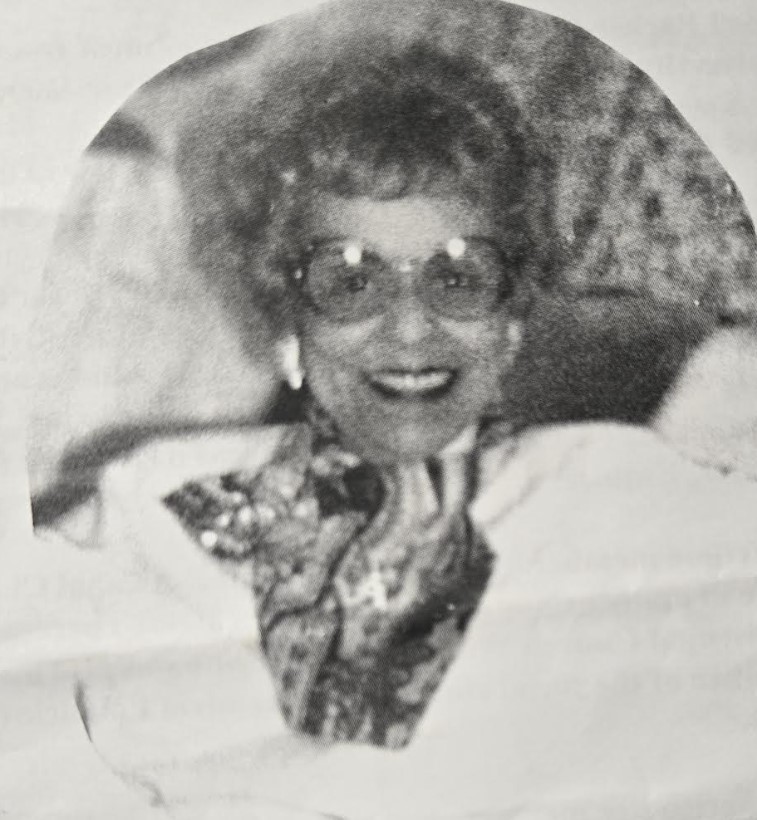
Raye Luckett Martin

Raye was a Probation Officer for twenty-five years in Alexandria, VA. Before her appointment with the City of Alexandria, she was a law clerk for Otto Tucker, Esquire. Otto was the brother of the famous Civil Rights Lawyer, Samuel Tucker.

Like her grandfather Freeman, Raye was devoted to her church. She was a lifetime member of the Meade Memorial Episcopal Church in Alexandria, and her grandfather was a member of Roberts Chapel Methodist Church for sixty-seven years before his death.

There are many lessons to learn from Freeman Murray and his children. When they retired, they worked hard and invented new careers. In death, Freeman still teaches us the value of having multiple survival skills. But his greatest lessons are religion and education.

©2024-Char McCargo Bah

Roberts Chapel Methodist Church

Behind the scenes of the Alexandria Gazette Packet’s article, “If These Walls Could Talk – Roberts Chapel Methodist Church”.

Roberts Memorial United Methodist Church

It is remarkable to research an African American Church’s history that goes back beyond the Civil War. This old Alexandria’s Church has records in old ledge books. One can feel the texture of the old books and see the markings of the old ink quill pen that recorded members’ activities in Church. The near perfect penmanship that once was considered the penmanship of literary individuals is displayed throughout the Church’s ledge books.

In Alexandria, you will find one of the oldest African American’s Methodist Church that has been around since 1832. You will find this Church on Washington Street where the view of Roberts Memorial United Methodist Church (UMC) seems to be tucked behind shady trees that could slightly block your view at 606 South Washington Street. This Church congregation started at Trinity Methodist Episcopal Church in Alexandria, Virginia prior to the 1830.

The free and enslaved African Americans left Trinity and started their own Church. The Church records of Roberts Memorial UMC speaks of the who’s who among African Americans in early days of Alexandria when the Church was known as Roberts Chapel. The Church has gone through several name changes from Davis Chapel to Roberts Chapel Methodist Church to its present name.

If you want to read more about Roberts Memorial UMC, check out this article, “If These Walls Could Talk – Roberts Chapel Methodist Church,” at the Alexandria Gazette Packet on pages 5 and 8 at http://connectionarchives.com/PDF/2021/050521/Alexandria.pdf.

Behind the Scene – “The Cigar Man Made a Better Life – James Thomas Ford”

James Thomas Ford
1913 – 1999

Mr. James Thomas Ford was a hardworking man. He was determined to make a better life for himself. At the age of 17, he knew the value of supporting a family. He along with his other siblings help earn money to support their mother and his younger siblings.

James was the second child of eleven siblings. His parents were Thomas Osborne Ford and Rosa Ellis. Thomas, his siblings and parents, Osborne and Elizabeth migrated from Fairfield, South Carolina to Richmond, Virginia.

Prior to 1930, Rosa and her children returned to her birthplace, Victoria, Lunenburg, Virginia. James spent a short time in his mother’s birthplace. Eager to have a better life, James Thomas Ford migrated at the age of 17 to Alexandria, Virginia.

James will make Alexandria his home and become a federal employee, cab driver and after retiring from the federal government, he became an entrepreneur. You can read more about Mr. Ford in the Alexandria Gazette Newspaper, “The Cigar Man Made a Better Life – James Thomas Ford,” on page 5, dated October 28, 2020 at http://connectionarchives.com/PDF/2020/102820/Alexandria.pdf.

A Family’s Devastation of Influenza Pandemic: Bessie Evans Baltimore Carter

We all have gold mines in our family and; family history is one of our overlooked gold mines.

Lucy Carter-Cross Roy and her daughter, Beatrice “Bee” Cross Taylor

The Baltimore, Carter and Spriggs’ families in Alexandria, Virginia were old family surnames that have been in Alexandria prior and after the Civil War. The Spriggs’ family was in Alexandria prior to the war, the Baltimore family came during the war and the Carter family came after the war. What these families have in common is that they were part of the growing black mid-class. They were the lawyers, entrepreneurs, teachers and property owners. These families married into each other’s families and they were members of Roberts Memorial United Methodist Church (Roberts Chapel).

However, their affluence did not prevent them from the flu pandemic. This pandemic impacted rich, mid-class, poor, elderly, adults, children, black, white and everyone else who made up the world population.

Bessie Evans Baltimore Carter was born in Alexandria, Virginia on March 19, 1891. She married Irving (Irvin) Chesterfield Carter. She had two daughters Verma and Lucy. Bessie died during the Influenza Pandemic on December 26, 1918.

Verma Evelyn Carter-Roy

Unknown to Bessie’s daughter Lucy that her mother died during the Influenza Pandemic. Lucy was two-years old and her sister Verma was three-years old when their mother died. However, Lucy was unaware about the rich family history that her family had. She and her sister had many historical gold mines in their family. These historical gold mines died with the death of their parents who did not have the time to share their family history with their children.

A story about Bessie Evans Baltimore Carter titled, “A Family’s Devastation of Influenza Pandemic” is in the Alexandria Gazette Newspaper dated May 13, 2020 on page 6 at http://connectionarchives.com/PDF/2020/051320/Alexandria.pdf