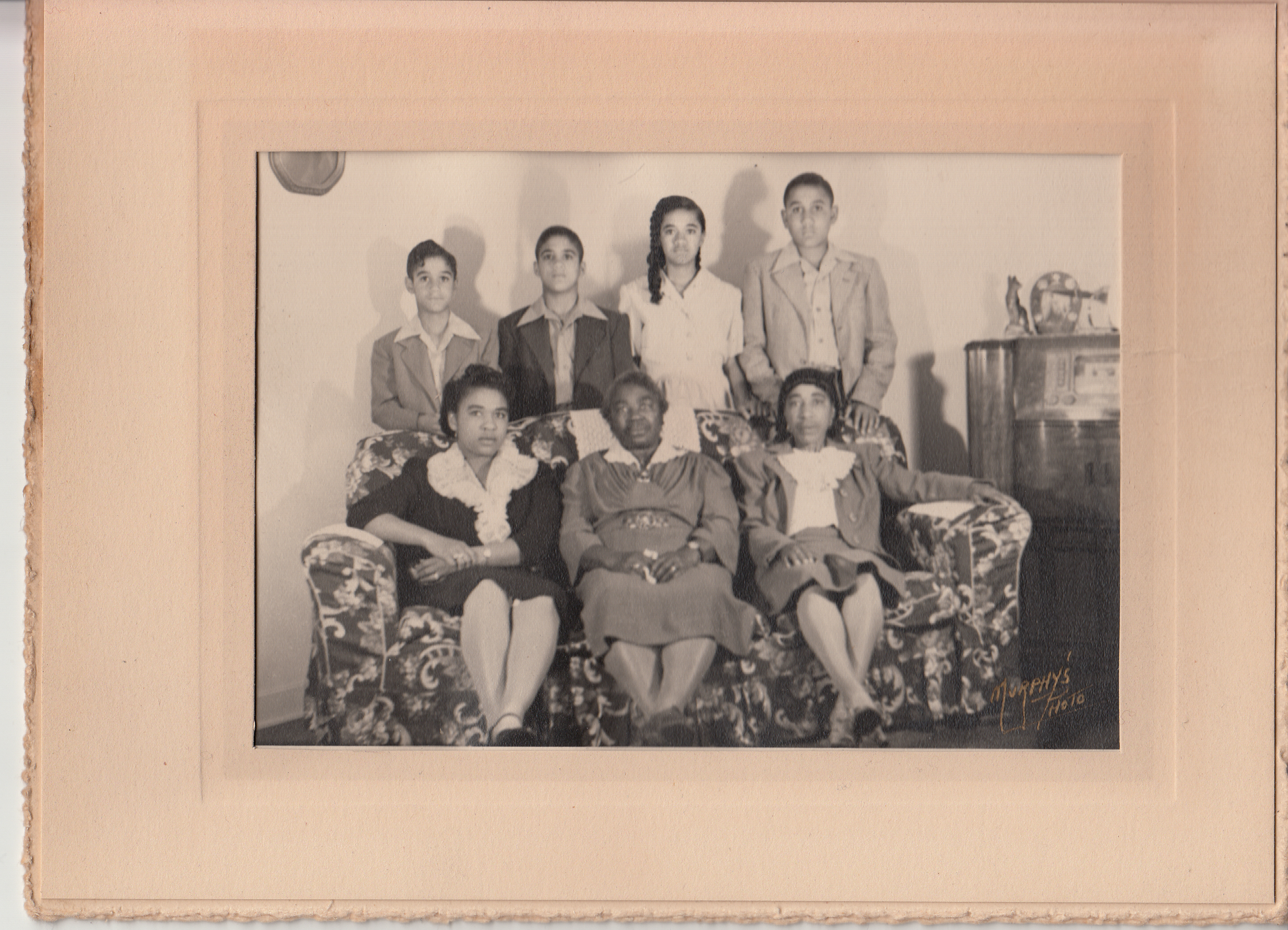
Betty Garrett Scott: Memories of My Grandfather

Backstory of the article that was published in the Alexandria Gazette Newspaper on July 15, 2020, gives insight into Betty Garrett Scott’s Roy family history.

Betty Garrett Scott

Betty Garrett Scott is the oldest child of Lucille T. Roy Garrett and Isaac Garrett. Betty’s parents met in Manhattan, New York. They were married on September 14, 1935. Shortly after Lucille and Isaac’s marriage, Lucille received word from her father, Norman that her mother, Elnora Lewis Roy had died. Elnora died in 1936. Lucille immediately left New York and went home to Seminary to help her father raise her siblings. Lucille’s daughter, Betty grew up with her extended family. The family consisted of her mother, siblings, grandfather and her aunts and uncles. Lucille’s siblings were Earnest, Estelle, Sylvester, Stanley, Beatrice, Norman Jr., Mary Ella, Harold, Carol (Carroll), Elnora, Phyllis and Ann Delores.

After the divorce of Betty’s parents, her mother Lucille married Wilbert Ocie Morgan on
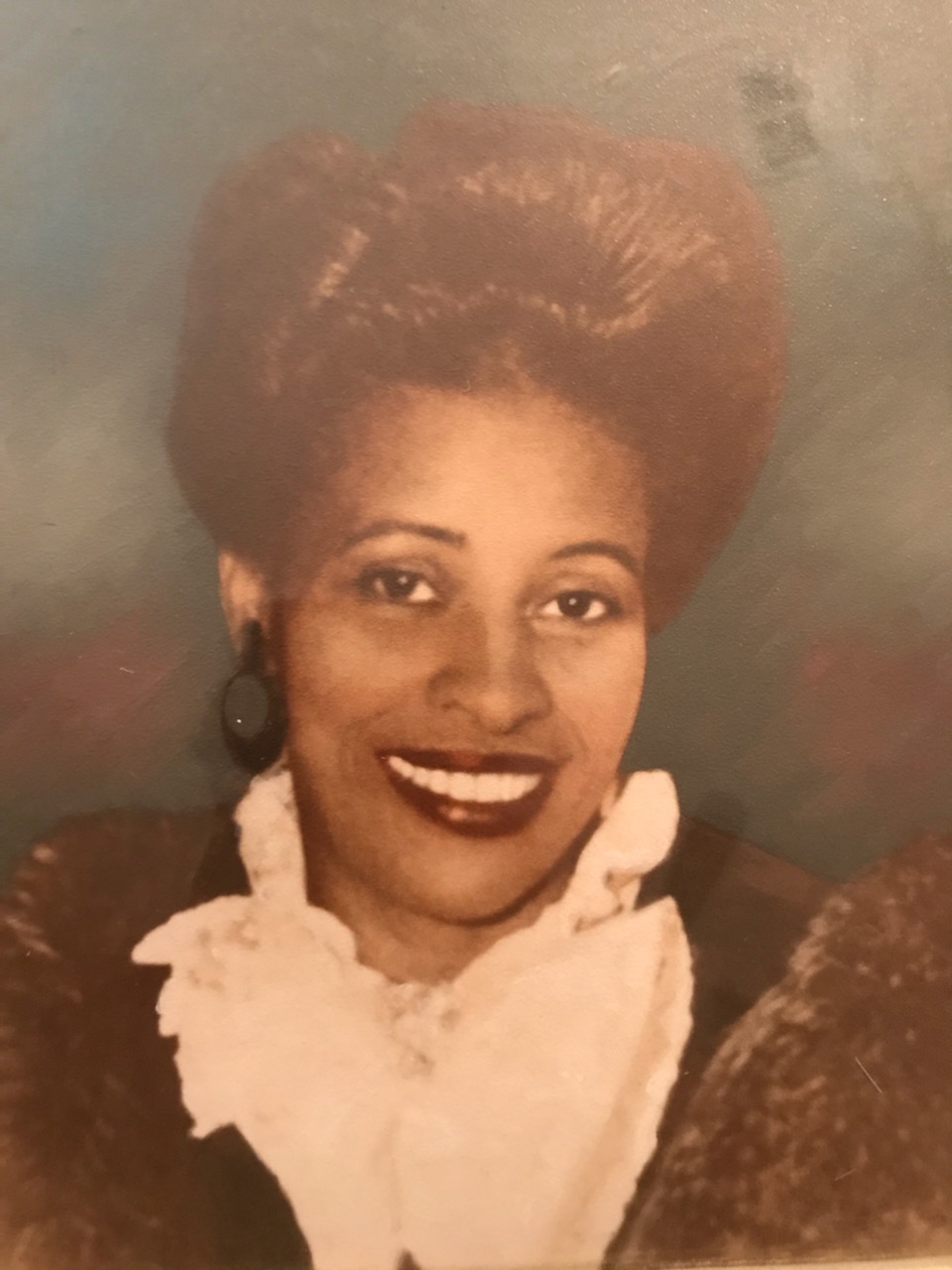
Lucille T. Roy-Garrett Morgan

August 25, 1948. Lucille and Wilbert had two daughters, Carolyn and Linda.

Betty was extremely close to her grandfather, Norman Roy. Norman was the son of James P. Roy and Harriett Wanzer. Norman’s father, James was born in Rappahannock County, Virginia. Norman’s mother, Harriett was a Wanzer. Harriett’s father, Wallace Wanzer had been in the Seminary area since the Civil War.
Betty’s grandfather, Norman died seven days after his birthday at the age of 95 in Arlington, Virginia.

Betty’s grandmother, Elnora Lewis Roy died before Betty was born. What Betty knew about her grandmother, she learnt from her mother and her grandfather but thanks to research, additional information was added to her grandmother’s family history.

Elnora Lewis Roy’s parents were Mack Lewis and Maria Foley. Mack and Maria married on December 29, 1869. Mack’s parents were William and Lucinda Lewis. Maria only listed her mother, Lucinda Foley on her marriage certificate. Mack owned land in Prince Williams, Virginia. Maria died after 1900. Mack remarried in 1909 to Mary Anderson. On August 7, 1925, Mack died at the age of 81.

The Roy, Lewis and Foley’s families have a rich history in Alexandria, Arlington, Falls Church, Fauquier, Prince Williams, Virginia.

You can read more about Betty Garrett Scott in the Alexandria Gazette newspaper dated, July 15, 2020 on page 10 at http://connectionarchives.com/PDF/2020/071520/Alexandria.pdf.

What A Wonderful Childhood: Frances Colbert Clements Terrell

This is my fourth story about African Americans living in the Seminary area. I look forward in writing more articles about African Americans who lived, worked and raised their children in Alexandria.

Before Seminary/West End was incorporated into Alexandria, it was part of Falls Church in Fairfax, Virginia. The African Americans who lived in that area had a unique life compared to the African Americans in the City of Alexandria. Many of their families owned their own property. They were self-contained as far as their own school, their stores, their churches and their culture.

The City of Alexandria was indeed a City but the Seminary community prior to becoming incorporated into Alexandria was considered rural. In all appearances, Seminary was a farming community with livestock.

Frances Colbert Clements Terrell had a wonderful childhood growing up in the Seminary area of Alexandria. You can read more about her childhood life in the Alexandria Gazette Newspaper dated April 29, 2020 on page 6 and 7, titled “What A Wonderful Childhood: Frances Colbert Clements Terrell” at

Click to access Alexandria.pdf

In Search for Descendants of Seminary (West End) in Alexandria, VA

Oakland Baptist Church

I am working on a project that is in the West End of Alexandria, Virginia which includes Seminary area, Wood Place, Wood Lane, parts of King Street, parts of Braddock Road, Quaker Lane, Donaldson Corner and etc. I am looking for descendants who worked for the Virginia Theological Seminary (VTS) who historically lived in that area up to the 1950s.

If you had a relative that worked at VTS, I would like to hear from you. Please contact me at findingthingsforu@gmail.com. Thanks – Char!

The surnames of these families are:

Adams
Ashby
Allen
Ball
Blackburn
Bradby
Campbell
Carpenter
Casey
Chambers
Colbert
Craven
Croane (Crone)
Douglas
Freeman
Grant
Hall
Harris
Henry
Jarvin
Jackson
Johnson
Jones
Lee
Lewis
McKnight
Mackey
Mallory
Miller
Nelson
Nickens
Penn
Peters
Peterson
Pollard
Randall
Reynolds
Russ
Rust
Rollins
Roy
Rust
Scales
Simms (Sims)
Smith
Shorts
Taylor
Terrell
Wanzer (Wanser)
Williams
Whiting
Wood
Quander
Quivis

Déjà vu – Alexandria African American Historic Housing Problems

Some problems never go away, the problem of housing in Alexandria is just one of those big problems. Looking back in time, we can see how these housing problems have impacted so many people especially African Americans and the poor.

In the early 20th century, the United States entered into World War I. By 1940s, the United States entered into World War II. Each of these wars brought more opportunities for the African Americans in Alexandria. The wars increased the demand for workers in the factories, the military, and in the Federal government. Along with these demands were the realization that Alexandria had a serious housing shortage. Many African Americans that were living in the City of Alexandria during this period of time lived in poor housing. Many of these homes were built during the 19th century without inside toilets and running water.

With the Federal Government Housing subsidies, affordable and public housing construction dominated the 1940s in Alexandria. During this construction boom in the 1940s, the country was experiencing “Jim Crow Laws,” which met separate but equal in name only, among the races. In order to build public housing in the African American communities, many of their homes were condemn and demolition.

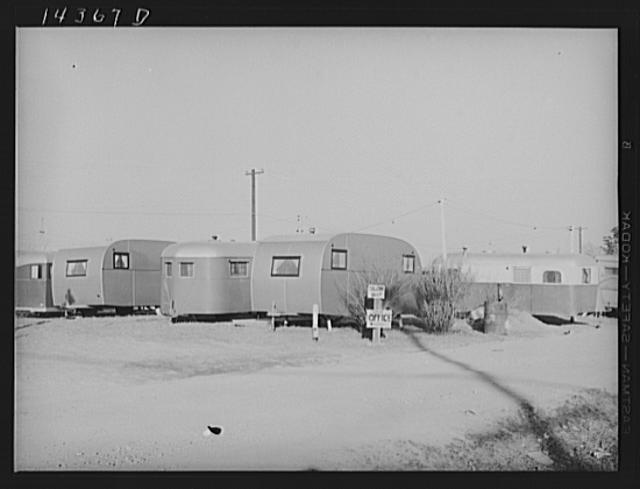
These African Americans were placed in temporary trailers.

1941 Trailer – Alexandria, VA

A family of six would be placed in two trailers. The parents would be in one trailer and the children would be in another trailer. Some families lived in the trailers between six to fifteen months. The condition that they lived in was horrible. The trailers did not have inside toilets nor showers. Designated trailers were used for showers. Toilet facilities were located in an outhouse building. These facilities were used by everyone who was living in the trailer camp. Parents feared for their children safety, especially for the girls and women.

Memories of this period of time are sketched into the brains of many of the elderly African Americans who lived through this transition period. Their families were put into the trailers until public housing became available.

Two families were interviewed about their life living in the trailer camp. Mr. John Taylor remembers that his dad would not take a shower nor use the bathroom in the trailer camp. “My father would walk to his parents’ house at 214 North Payne Street to shower and use the bathroom. It was really bad in the trailer camp.” Their trailers were on First Street in Alexandria.

Mrs. Charlene Napper, the sister of Mr. John Taylor, remembered that she was a little girl around seven or eight-years-old when they moved to the trailer camp. They had two trailers assigned to them. She also remembered when the family moved out to the newly built public housing at 1005 Madison Street. “Our family did not stay long in public

First row: Mrs. Dorothy Knapper-Taylor and her grandmother and her mother – Second roll: Mrs. Dorothy’s children – they all are in the new home on North Payne Street

housing, because my parents were told by the housing authority that my oldest brother would have to move out when he turned eighteen.” Ms. Charlene told me that her father’s employer helped them to purchase a home so that their family could stay together. Today Mrs. Charlene lives in the family home on North Alfred Street. The family has owned this house for seventy-plus years.

Mr. James Beatty’s family also lived in the trailer camps on First Street in Alexandria in the 1940s. Two trailers were assigned to his family as well. After they were relocated to public housing on St. Asaph Street, Mr. Beatty’s father started saving his money and making plans to relocate his family. The opportunities for African Americans to buy their own property in Alexandria was bleak, so Mr. Beatty’s family moved to Washington, DC.

After public housing was built, many African Americans in Alexandria were not eligible for those houses. Their incomes were not low enough to qualify; and, with the segregation laws in place, they couldn’t rent nor buy in the white communities in Alexandria. So, like

Mr. James Beatty

Mr. Beatty’s family, they migrated to Washington, DC and left so many friends and family members behind.

Again, Alexandria is experiencing a demand in housing. And just like the 1940s, again African American families are at risk for affordable housing. But unlike the 1940s, many will not be moving to Washington, DC, because DC has their own shortages of affordable housing.

So, if you live long enough, you will have your Déjà vu moment; and, affordable housing in Alexandria is truly a Déjà vu moment.