Déjà vu – Alexandria African American Historic Housing Problems

Some problems never go away, the problem of housing in Alexandria is just one of those big problems. Looking back in time, we can see how these housing problems have impacted so many people especially African Americans and the poor.

In the early 20th century, the United States entered into World War I. By 1940s, the United States entered into World War II. Each of these wars brought more opportunities for the African Americans in Alexandria. The wars increased the demand for workers in the factories, the military, and in the Federal government. Along with these demands were the realization that Alexandria had a serious housing shortage. Many African Americans that were living in the City of Alexandria during this period of time lived in poor housing. Many of these homes were built during the 19th century without inside toilets and running water.

With the Federal Government Housing subsidies, affordable and public housing construction dominated the 1940s in Alexandria. During this construction boom in the 1940s, the country was experiencing “Jim Crow Laws,” which met separate but equal in name only, among the races. In order to build public housing in the African American communities, many of their homes were condemn and demolition.

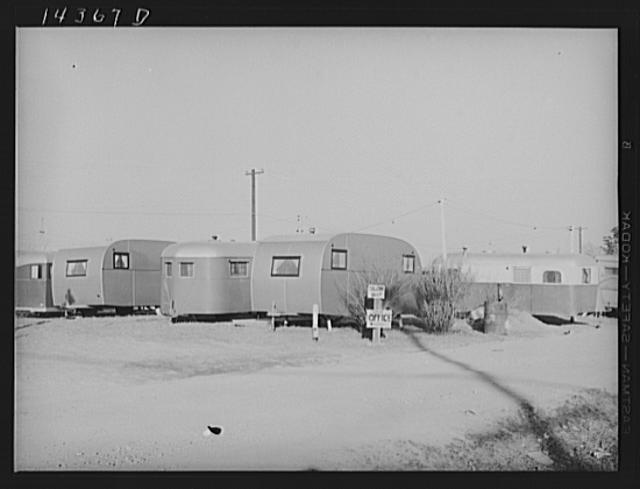
These African Americans were placed in temporary trailers.

1941 Trailer – Alexandria, VA

A family of six would be placed in two trailers. The parents would be in one trailer and the children would be in another trailer. Some families lived in the trailers between six to fifteen months. The condition that they lived in was horrible. The trailers did not have inside toilets nor showers. Designated trailers were used for showers. Toilet facilities were located in an outhouse building. These facilities were used by everyone who was living in the trailer camp. Parents feared for their children safety, especially for the girls and women.

Memories of this period of time are sketched into the brains of many of the elderly African Americans who lived through this transition period. Their families were put into the trailers until public housing became available.

Two families were interviewed about their life living in the trailer camp. Mr. John Taylor remembers that his dad would not take a shower nor use the bathroom in the trailer camp. “My father would walk to his parents’ house at 214 North Payne Street to shower and use the bathroom. It was really bad in the trailer camp.” Their trailers were on First Street in Alexandria.

Mrs. Charlene Napper, the sister of Mr. John Taylor, remembered that she was a little girl around seven or eight-years-old when they moved to the trailer camp. They had two trailers assigned to them. She also remembered when the family moved out to the newly built public housing at 1005 Madison Street. “Our family did not stay long in public

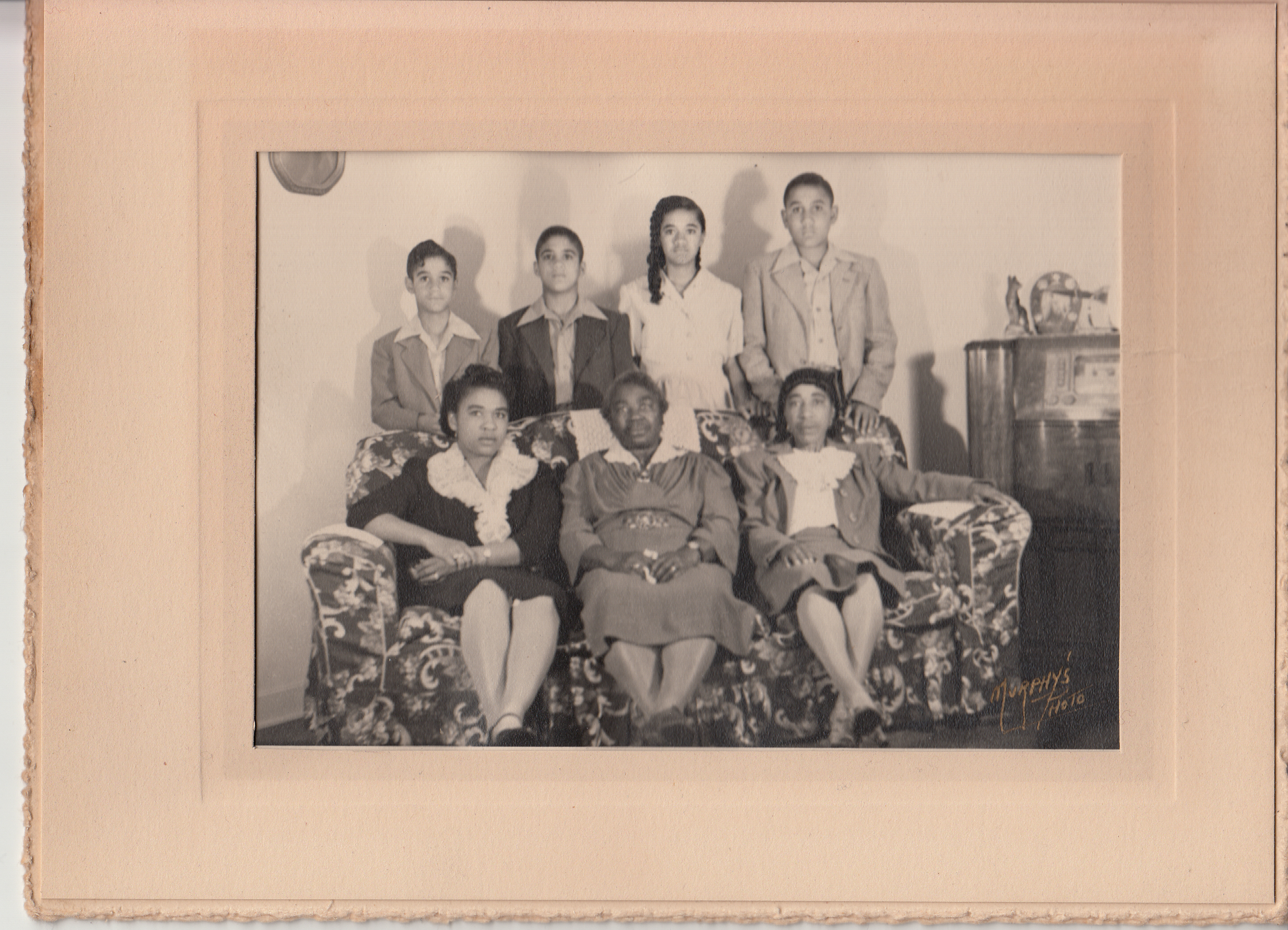
First row: Mrs. Dorothy Knapper-Taylor and her grandmother and her mother – Second roll: Mrs. Dorothy’s children – they all are in the new home on North Payne Street

housing, because my parents were told by the housing authority that my oldest brother would have to move out when he turned eighteen.” Ms. Charlene told me that her father’s employer helped them to purchase a home so that their family could stay together. Today Mrs. Charlene lives in the family home on North Alfred Street. The family has owned this house for seventy-plus years.

Mr. James Beatty’s family also lived in the trailer camps on First Street in Alexandria in the 1940s. Two trailers were assigned to his family as well. After they were relocated to public housing on St. Asaph Street, Mr. Beatty’s father started saving his money and making plans to relocate his family. The opportunities for African Americans to buy their own property in Alexandria was bleak, so Mr. Beatty’s family moved to Washington, DC.

After public housing was built, many African Americans in Alexandria were not eligible for those houses. Their incomes were not low enough to qualify; and, with the segregation laws in place, they couldn’t rent nor buy in the white communities in Alexandria. So, like

Mr. James Beatty

Mr. Beatty’s family, they migrated to Washington, DC and left so many friends and family members behind.

Again, Alexandria is experiencing a demand in housing. And just like the 1940s, again African American families are at risk for affordable housing. But unlike the 1940s, many will not be moving to Washington, DC, because DC has their own shortages of affordable housing.

So, if you live long enough, you will have your Déjà vu moment; and, affordable housing in Alexandria is truly a Déjà vu moment.

Star Cab: Alexandria, Virginia First African American Cab Company

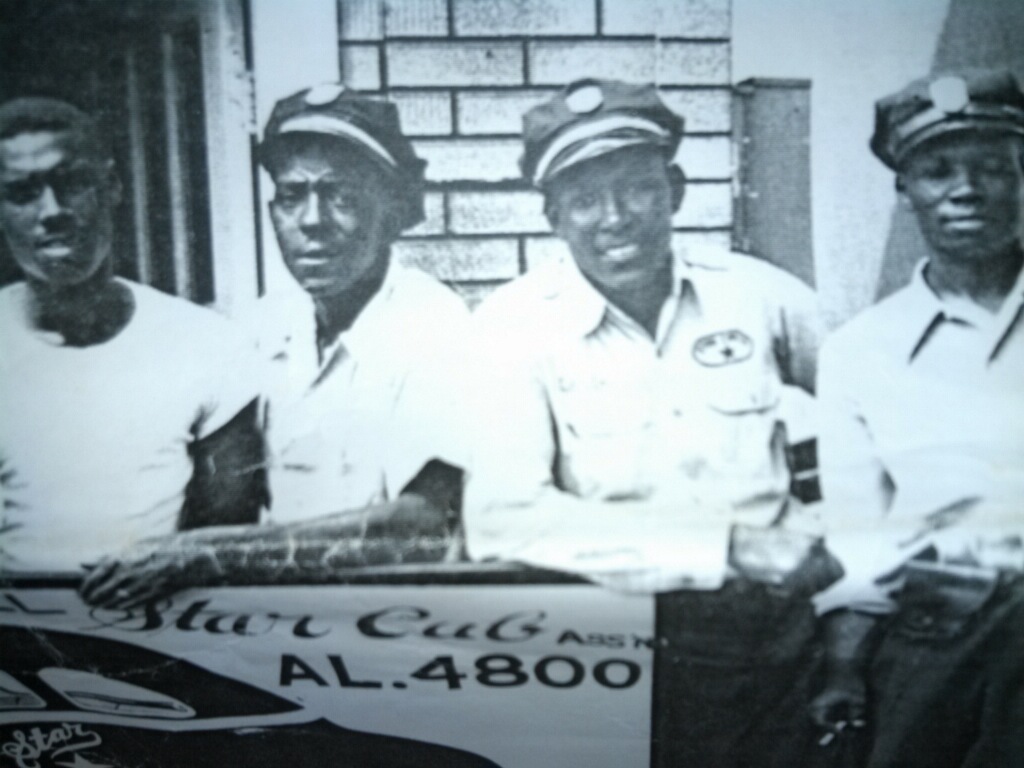
The picture in the blog banner is a picture of three men who owned their

1940s-1950s Star Cab Staff, photo by Elrich William Murphy

cabs and drove for “Star Cab Company” during the 1940s and 1950s. These men were Mr. Ike Marshall, Mr. Clarence McKenney, Sr., and Mr. Norman Reynolds, Sr; this picture was taken in the 400 block of South Columbus Street. Some other drivers who drove under the Star Cab Company were Mr. John Galloway, Mr. Samuel Taylor, Jr., and Mr. William Charity.

Mr. William Charity’s cab number was 22. Mr. Charity started driving for Star Cab in the early

Mr. William Charity
Mr. William Charity


1940s part-time. He had a full-time job in the Federal Government. He soon realized that he made more money driving the cab than he did on his full-time job. He quit his government job and started driving full-time for Star Cab. Mr. Charity has fond memories of driving; “the drivers back then dressed in uniforms and we were well respected by the people who knew us”, Mr. Charity stated in a home visit that I made with Mrs. Wilson’s great-great niece, Ms. Shenise Foster to his home. Mr. Charity was able to buy his home on the salary he made from the cab business as well as provide a good living for his wife and children. Today, Mr. Charity is the last man standing who once drove for “Star Cab.” Mr. Charity is 101-years-old and he has been a member of Ebenezer Baptist Church for over 90-years.

Who was this extra-ordinary African American business minded woman who started the “Star Cab Company?”

Star Cab was owned by an African American female named, Madeline Morton Wilson who had a remarkable sense for business. She was born in Orange, Virginia around 1903. She and her brother, Clarence Morton migrated to Alexandria, Virginia and Washington, D.C., when they were young. Mrs. Wilson appeared to have stayed in Alexandria, Virginia with an aunt, Elmira Morton Matthews who migrated earlier to Alexandria. In 1926 at the age of 23, Madeline Morton married Wadsworth Wilson who was 44-years-old. Prior to her marriage, she was living at 408 Oronoco Street, in Alexandria, VA; but, she reported on her marriage license that she was born in Orange, Virginia. Prior to Mr. Wadsworth Wilson’s marriage, he was living at 617 St. Asaph Street; he reported on his marriage license that he was born in Washington, DC. They were married by Father Joseph J. Kelly at Saint Joseph Catholic Church in Alexandria, Virginia.

In Mrs. Wilson’s short life, she was a woman that was on the move making independent business deals. She had her own business as a hairdresser. She purchased her family home at 700 North Patrick Street.  Mrs. Wilson, her husband, son, and several years her young niece lived in the two story home were her hair dressing and barber shop were operated in the front portion of the home. She independently purchased several other properties in Alexandria. Many of her business transactions were recorded only in her name. One of her biggest business’ deals took place in 1940, when she started the “Star Cab Company.”

John “Buddy” Wilson second person from the right

Although her son, John “Buddy” Wilson ran the day to day operations, Mrs. Wilson was the owner. In 1945, she obtained business partners and incorporated the Cab Company into “Star Cab Association.” Her partners were:

Mrs. Pearl M. Willis – 909 Princess Street, Alexandria, Virginia
Mr. John Galloway, Jr – 233 North West Street, Alexandria, Virginia
Mr. Samuel Taylor, Jr – 318 North Alfred Street, Alexandria, Virginia

In 1950, Mrs. Wilson had passed away. In the Alexandria Gazette Newspaper, her obituary stated that she had a long illness. She died at Freedman Hospital in Washington, DC. Mrs. Wilson was survived by her husband, Wadsworth Wilson, her son, John (Buddy) Wilson, her brother, Clarence Morton of Philadelphia, Pennsylvania, and her aunt, Elmira Mayetta Morton Matthews of Massachusetts.

Mrs. Madeline Morton Wilson was the business genius in her family. After her death, three-years later in 1953 her husband, Wadsworth Wilson died. He was survived by his son, John (Buddy) Wilson, brother, John Wilson, and many nieces, and nephews. Shortly after the death of Madeline and Wadsworth, their son lost everything. He could not maintain all the property that his mother acquired. John “Buddy” Wilson died as a lonely man without his relatives near him.

The niece of Mrs. Madeline Morton Wilson lives in Cape May, New Jersey. She and her granddaughter, Shenise are currently researching their family history.

I want to thank Mrs. Carolyn Phillips McCrae and her nephew, Norman Reynolds, Jr., for providing the pictures of “Star Cab”. Norman, Jr., is the son of Norman Reynolds, Sr., who drove for Star Cab. Also, Ms. Shenise Foster, great-great niece of Mrs. Madeline Morton Wilson, provided three pictures including the one of Mr. Charity.

Announcing a New Blog

ChangeAgentsGroupPic_0001
Authors of African Americans of Alexandria, Virginia Beacons of Light in the Twentieth Century

A new blog is available for the authors of a new book “African Americans of Alexandria, Virginia: Beacons of Light in the Twentieth Century.” Please visit their blog at http://www.changeagents818.wordpress.com. Click on the different sections About, Contact Us, and Calendar of Events. Do not forget to order the book and come back to the blog for a book discussion. If you want to invite the authors for a lecture and book signing, go to “Contact Us” on their Blog and send an e-mail. Thanks!

Urgent Call to Save Carver Nursey School – William Thomas Post #129


Carver Nursery School - William Thomas Post #129
Carver Nursery School – William Thomas Post #129

The Carver Nursery School could be demolished as soon as the month of February if the community does not intervene. The school was constructed during World War II through an Act of Congress to fund nursery schools so that parents of children could work in the war effort. The Carver Nursery appears to be the only one built specifically for African Americans. The building consisted of two classrooms with a playground on site. The playground is now the Hunter-Miller Park. Located in the Parker-Gray Neighborhood, the school was in the heart of a thriving Black business area at Queen and Fayette Streets.

The school would later become the William Thomas Post#129 of the American Legion and was the social hub of the neighborhood.

Two and a half years ago, a local developer who then applied for a demolition permit purchased the property. The Parker-Gray Board of Architectural Review and the City Council approved the demolition. The developer has already built eleven houses in the neighborhood and recently put eight condominiums in a former laundry building nearby. The eight condominiums (condos) add character and blend in with the neighborhood. The demolition of the Carver School runs contrary to the purpose of the Parker-Gray Historic District.

Historical Facts:

The Parker-Gray Historic District was created in 1984 and one of its main purposes was to protect the area from development pressures that could arise from the building of the King Street and Braddock Metro Stations. The stations are within blocks of the Carver Nursery School. The plan in 1984 was to nominate the neighborhood for the National Register of Historic Places. In 2004, the City of Alexandria conducted a survey and at that time, the Carver Nursery School was one of many structures singled out as having contributed character to the neighborhood. The two Parker-Gray Schools had already been demolished. The threat of the demolition of Carver School is a test to the preservation of buildings that have played a part in the history of Black Alexandria. This building is the only known building of its type still existing and was listed on Preservation Virginia’s eleven most endangered properties list of 2010.

Saving Carver Nursery School Building:

There is only one option for saving the building and that is for the City of Alexandria to intervene. Ask the City to temporarily halt the demolition so that the community can have a voice and suggest some alternatives. To help, please e-mail City Council at www3.alexandriava.gov/contactus/mailto.php?id=610.

You can also contact Boyd Walker from the Greater Alexandria Preservation Alliance at Boydwalker2012@gmail.com to get a copy of the petition that is now circulating, and help gather signatures.  Time is running out, so please help us tell the whole story of the Parker-Gray Neighborhood.

Boyd Walker is a community activist who started the Greater Alexandria Preservation Alliance five years ago, to be an advocacy organization for Historic Preservation in Alexandria.  The purpose of the Alliance is to work beyond Alexandria’s borders with state and local partners and to make Alexandria a greater place.  He is a native of Alexandria who grew up on the “Southside.”  He was a co-founder of Citizens for an Alternative Alexandria Waterfront Plan, now known as Friends of the Alexandria Waterfront and a recent candidate for Alexandria City Council.