In this week’s Alexandria Times Newspaper is an article on Charles Lyles. Charles has faced many obstacles in his life. One of the obstacles not mentioned in the article was when he was 16, he and his siblings played Cowboy and Indians using BB guns. One of the BBs hit Charles in one of his eyes, which caused him to lose his vision. In addition, to losing his sight in one eye and having other accidents in his life, Charles excelled as a model employee.
This photo shows Charles Lyles receiving an award for his excellent contribution to the Department of Justice, Drug and Enforcement Administration.
If you were visiting Alexandria in the 1950s, you would notice distinct African American neighborhoods like the Berg, Uptown, Hump and so on, but the history of African Americans in Alexandria remained unknown. Due to the efforts of Lance Mallamo former Director of Office of Historic Alexandria (OHA), Gretchen M. Bulova, Director of OHA, Audrey P. Davis, Director of Alexandria Black History Museum (ABHM) and McArthur Myers, Alexandria 2020 Living Legend/Community Activist, the history and stories of early African Americans in Alexandria have become known.
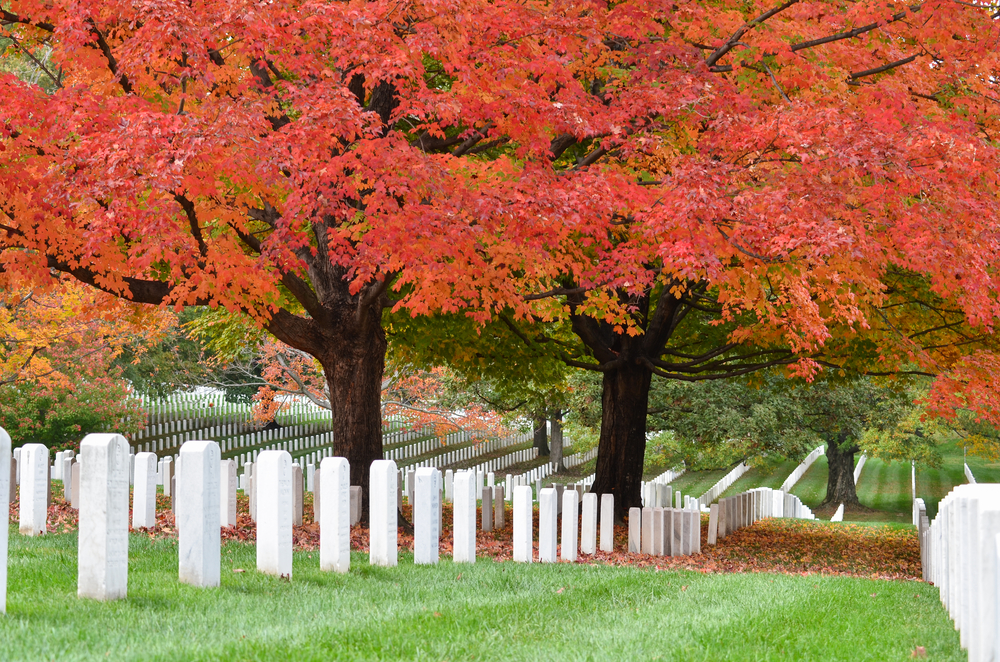
One of Alexandria’s first national African American projects was the 2014 dedication of the Alexandria Freedmen Cemetery. Hundreds of descendants whose families are buried in the Freedmen Cemetery attended the weeklong events. The former Director of OHA, Lance Mallamo, initiated the weeklong celebration. That event was a turning point for many Alexandria’s African Americans who felt that their history had been forgotten. The event received national-wide coverage from newspapers to television media. Today, the Freedmen Cemetery still attracts tourists as well as Alexandrians. After Mallamo retired, Gretchen M. Bulova was hired in 2019 for Mallamo’s position.
Gretchen and Audrey
Bulova and Davis continue to reveal the rich history of Alexandria African Americans. Some of the projects included the purchase of the “Freedom House”, the former 19th Century Slave Pen from 1828 – 1861. The Freedom House is now a museum. Another one of the City’s projects is the Alexandria African American Heritage Trail that highlights the history of African Americans from the time Alexandria was founded to the 20th Century. In addition, OHA, ABHM and others assisted in getting Earl Lloyd’s Street sign. Earl was an Alexandrian who became the first African American National Basketball Association player.
Under the leadership of Bulova and Davis, the City joined the Equal Justice Initiative to find out whether the City of Alexandria had any history of lynching. Through the committees that OHA formed, they found out that two individuals were lynched in Alexandria. OHA immediately found the financial resources to hire experts to do further research about the two individuals, and to locate their descendants. OHA, some City employees, and the descendants of the lynched victim, Joseph McCoy, and some private citizens traveled in October of 2022 to Alabama. The party carried the soil from Alexandria where the lynching took place in 1897 and 1899 to Alabama. That event also brought national recognition to Alexandria.
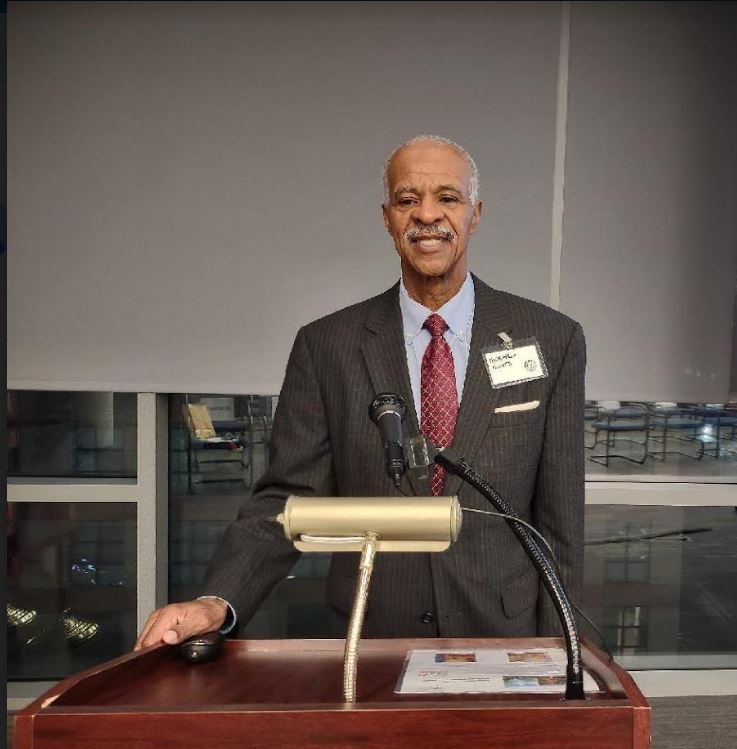
Outside of OHA, a dedicated citizen has tirelessly committed his time to identifying historical sites that are associated with African Americans. McArthur Myers retired from the District of Columbia government in 2015. He advocated for fifteen historical signs at sites that are associated with the history of African Americans in Alexandria. His efforts in reclaiming Alexandria African American’s history speaks to volumes about his dedication to the City. He attends City Hall meetings, and he walks the streets of Alexandria identifying sites connected to African American history. Myers is very passionate about the history of Alexandrian African Americans. He, without doubt, is one of the most dedicated advocates for the history of African Americans in Alexandria.
McArthur Myers
Looking at Alexandria today is not the Alexandria that I once knew in my childhood because African American history was absent. In the 20th Century leading up to the 1970s, the local history of African Americans in the City of Alexandria was not available to the public, nor in the school system. Now, one can walk the streets of Alexandria and see the presence of the history of African Americans of long ago. Although Alexandria looks different in the 21st Century, with old housing communities of the 1930s and 1940s that have been torn down and new ones replaced the old structures, I feel that there are still sites in the City that remind people about the history of African Americans.
Thanks to the City of Alexandria for making efforts that tell the history and stories of their local African Americans who played an important role in the history of Alexandria from the time the City was founded.
Char McCargo Bah is a published author, freelance writer, columnist, independent historian, investigative/genealogist researcher and a Living Legend of Alexandria.
“Behind the Scenes of The Other Alexandria’s Column”
It was a cloudy rainy day when Corrine Henry was born on Tuesday, November 15, 1927. She was her parents’ sunshine.
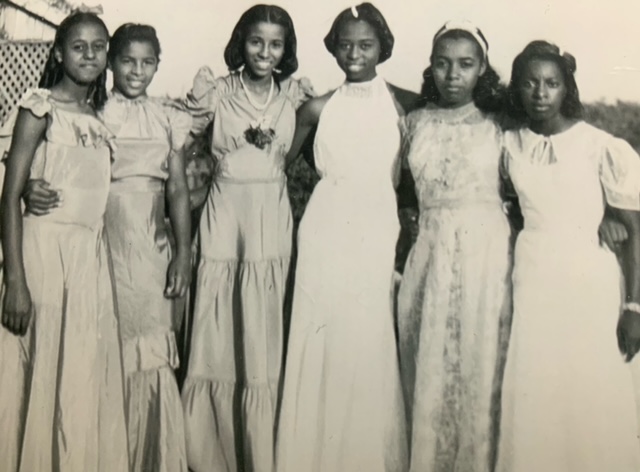
Left to right, Hilda Wanzer, Mamie Casey, Vivan Rust, Corrine Henry, Lillian Terrell and Frances Wanzer
Throughout Corrine’s childhood, she was outgoing and full of life. In her teens, she and several of her friends formed a group called the Silver Slippers. Like all teenagers, Corrine made sure she looked her best. She enjoyed applying her makeup even when she was sick. Her family and her friends played an important role in her life.
In her late teens, she became engaged to John Sidney Holland, Jr. He was in the United States Army. By the time he gets out of the military, Corrine would have started experiencing early stages of Multiple Sclerosis.
Multiple Sclerosis is a disease that attacks the nervous system. Symptoms can vary, but in many cases, one will feel weakness, numbness, shaking (tremors), loss of vision, pain, paralyses and loss of balance.
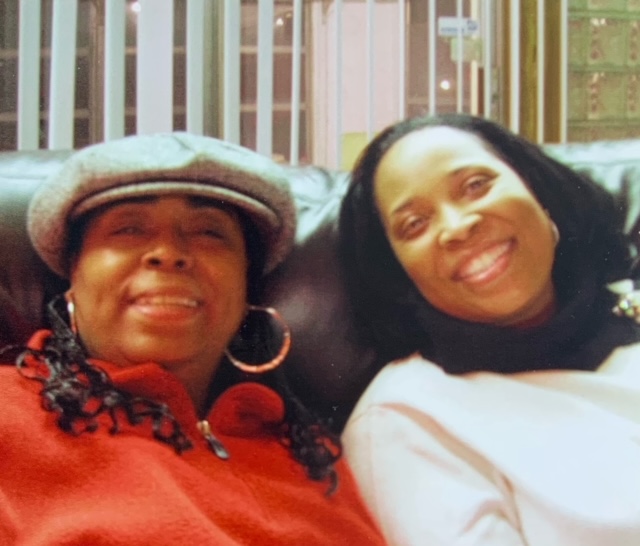
Corrine’s daughter, left to right – Sylvia Henry and TonietteHenry Duncan
Corrine’s day-to-day life was limited due to her illness, but she kept a smile on her face and enjoyed her two children, Sylvia and Toniette. She lived with her parents who provided for her and her children.
Many people came to Alexandria during the civil war from Maryland, North Carolina and other parts of Virginia. Few African American families talked to their children about their lives prior to the civil war. These stories were lost and never passed down through the generations. However, one of these families who migrated to Alexandria during the civil war did share their family history with their younger generation.
Annie Lee Wheeler shared her father’s family history with her daughter, Helena Wheeler and her grandchildren, especially her granddaughter, Shirley Gilliam Sanders Steele.