Coming Home—Army -T/5 Julius J. Smith

Julius J. Smith

It was a chilly day on December 7, 1941, in the Northern Virginia area when a Japanese Plane bombed Pearl Harbor. On the following day, the United States (U.S.) declared that they were at war with Japan and Japan’s allies. The U.S. announced a military draft, and many men were drafted; some enlisted, including men from Alexandria. One of those men who enlisted from Alexandria was Julius J. Smith.

Julius was the son of Moses Smith and Hester Carter Smith. On May 29, 1942, Julius married Lillian Virginia Newman. Both were only nineteen years old. Before his marriage, he lived with his parents at 606 South Washington Street, and Lillian lived with her parents at 601 North Pitt Street.  

Julius worked at Leon Baltimore Radio Shop on Washington Street when he was a teenager. The skills he developed at the Radio Shop became helpful in the Military. When he married Lillian, he was working at the Southern Railroad. But his life changed quickly when the call for eligible men to enlist in World War II.

Twenty-nine days after he married, Julius enlisted in the Army in Alexandria on June 30, 1942. He did his basic training in the U.S. While waiting to go overseas, he could visit his wife, daughter, and parents. Julius was not assigned to a particular unit. He was classified as a T/5, which was a Technician Fifth grade. This rank was established in the U.S. Army from 1942 to 1948. The rank was created to recognize enlisted soldiers with exceptional technical skills who were not trained as combat leaders. Julius was one of those specially trained people. In his teens, he worked as a radio repairman and knew the ends and outs of a radio.

Individuals with the T/5 rank were addressed as “corporal,” the same as the corresponding non-commissioned officer at the same pay grade. The technician ranks were removed from the U.S. Army rank system on August 1, 1948.

Julius was sent overseas to France in late 1943. While he was in France, he was directly in the combat areas. Several months into his assignment, he was involved in a fatal trucking accident. He died on July 3, 1945. Julius left his wife, daughter, and his one-year-old son, Linwood Smith, whom he never had a chance to see.
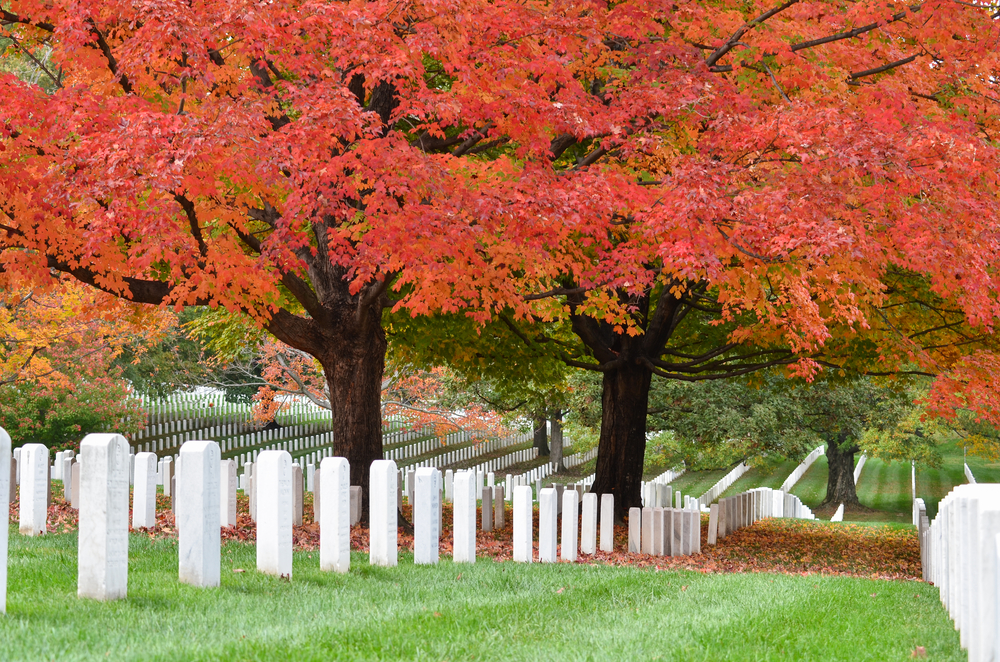
Arlington’s National Cemetery

He was buried in St. Avold Metz, France, but his family petitioned the government to return his remains to the United States. On the Army’s transport, Carroll Victory Ship, on November 18, 1948, sixty-five deceased U.S. Soldiers from the District, Maryland, and Virginia area came home. Julius was one of those soldiers. His coffin was draped with the U.S. Flag and delivered to Alexandria, waiting for his last resting place at Arlington National Cemetery.

On December 15, 1948, over three years after the death of Julius, his family attended his burial ceremony at Arlington National Cemetery. Julius finally came home.

©2024-Char McCargo Bah  

The Other Alexandria: A 160-year-old Road Map

Annie Lee Wheeler’s death certificate

Many people came to Alexandria during the civil war from Maryland, North Carolina and other parts of Virginia. Few African American families talked to their children about their lives prior to the civil war. These stories were lost and never passed down through the generations. However, one of these families who migrated to Alexandria during the civil war did share their family history with their younger generation.

Annie Lee Wheeler shared her father’s family history with her daughter, Helena Wheeler and her grandchildren, especially her granddaughter, Shirley Gilliam Sanders Steele.

Check out their story in the Alexandria Times’ newspaper dated April 14, 2022, at https://alextimes.com/2022/04/the-other-alexandria-steele/.

The Other History of Fish Town – Dogan Family

Behind the scenes of the Alexandria Gazette Packet’s article on, “The Other History of Fishtown – Dogan Family”

Betty Dogan Roberts Nicholas

Mrs. Betty Dogan Roberts Nicholas’ father, William S. Dogan II’s family has been in Alexandria since the 1700s. The Dogan were born free prior to the Civil War. They had businesses in Alexandria down at the wharf. They lived for many years in an African American neighborhood called Fishtown in Alexandria.

One of the Dogans had a restaurant and bar business down at the fish wharf before the civil war. With that type of business, he brought real estate in Alexandria. The properties with houses on it were rented out. This was a source of income for the family.

Unknown to the present generation, they were unaware that their family had been in the area for over 300 plus years. They contributed a lot to the history of Alexandria and they saw a lot of history made in Alexandria.

Check out this article “The Other History of Fish Town – Dogan Family” on pages 9 and 10 at http://connectionarchives.com/PDF/2021/051921/Alexandria.pdf.

“Getting Ready to Cast My Vote – Cassie Reddick Whitmore”

Behind the scenes of the Alexandria Gazette Packet’s article on, “Getting Ready to Cast My Vote – Cassie Reddick Whitmore”– dated December 9, 2020.

Gale Brooks-Ogden

Gale Arlene Brooks Ogden is her family’s historian. She played a major role in providing information on her family who are connected to the Alexandria Freedmen Cemetery. Her family has been in Alexandria since the Civil War.

The article that was in the Alexandria Gazette focused on Gale’s great-grandmother, Cassie Reddick Whitmore. Although, Gale never had a chance to meet Cassie, she collected family stories and researched Cassie’s life. Cassie was dead almost two decades before Gale was born.

Through Gale’s research, she was able to know a lot about Cassie’s life. Cassie had the strong fierce spirit of her parents. Both of Cassie’s parents were born in enslaved and they were bold enough to make it from Hartford, North Carolina and Loudoun, Virginia during the civil war to Alexandria.

Cassie also seek freedom just like her parents. She wanted the freedom to cast her vote. With the passing of the 19th Amendment, Cassie cast her vote in the November 2, 1920 Election for the presidential candidate Warren G. Harding. Cassie made history and that history was passed down for 100 years to her great-granddaughter Gail.

Correction to the Alexandria Gazette article on page 6, Cassie Reddick Whitmore. Correction on the first line it should be 19th Amendment.   In the seven paragraph, President Franklin D. Roosevelt was 32nd President and not the 39th. 

Check out this article on “Getting Ready to Cast My Vote – Cassie Reddick Whitmore”– dated December 9, 2020 in the Alexandria Gazette Packet on page 6 at
http://connectionarchives.com/PDF/2020/120920/Alexandria.pdf.