Martha Miller’s Kindergarten School (1930s – 1950)

Behind the scene of the Alexandria Gazette story published 3 May 2018 on “Martha Miller’s Kindergarten School” (1930s – 1950).

I was encouraged by Mrs. Martha Napper-Miller’s former students to share their fond memories of Mrs. Miller.

When I started researching Mrs. Miller last year, only one person I talked to knew that Mrs. Miller was married. Mr. James E. Henson was one of Mrs. Miller’s students and she was also his babysitter. Mr. Henson shared with me that he stayed with Mrs. Miller during the week and his mother picked him up on the weekend. He remembers Mr. Miller being a quiet man.

Thelma Lucas stated, “Martha Miller taught me and all my siblings.”

Besides the three people I mentioned in the article, others shared their stories of their private Kindergarten School:

Mrs. Bernice Lee stated that her kindergarten teacher was Mrs. Alma Pinn-Murray who had her school around the same time as Mrs. Miller. Mrs. Murray was also a public school teacher.

Dwaine E. Terrell remembered his kindergarten teacher, Mrs. Mary Howard-Penn.

Also Deborah Ford-Nelson and Rosie Ford remembered going to Mrs. Mary Howard-Penn’s Kindergarten School. Rosie stated, “She taught me how to read and much more.” Rosie has been friends with Mrs. Penn’s daughter, Sandra, since they have been four-years-old. Also to note that Mrs. Mary Howard-Penn had several siblings who were teachers in the Alexandria Public School system in the 1950s through 1980s.

Gail Arrington-Jones’ kindergarten teachers were Mrs. Ethel Nelson and Mrs. Mary Burgess. Gail stated, “We honored Mrs. Nelson in 2015 for her operation of the Kindergarten School in 2015.” It is noted that Mrs. Nelson still lives in Alexandria, Virginia.

In the newspaper article, I stated that Mrs. Miller had two other teacher aides, Saretta Norton and Christine Butler. Christine was Mrs. Miller’s niece. Thank you Becky Mays for confirming that information.

Becky also stated, “Ms. Christine Butler held her kindergarten classes in my Mom’s house on Princess Street. It was awesome.” After the death of Mrs.

Martha Napper-Miller’s
Death Certificate

Miller in 1952, Christine continued to teach. She moved the School from Oronoco Street to Princess Street.

Mrs. Martha was multi-talented. Not only did she have her Kindergarten School, she was a dressmaker and a laundress. Her husband, Pierce S. Miller migrated from North Carolina to Alexandria where he met and married Mrs. Martha. Many of her close relatives are deceased. They were:

Cora Marshall Napper (mother): 1856 – 1922
Samuel Napper (father): 1853 – 1930
William Napper (brother): 1888 – 1913
Richard Russell Napper (brother): 1890 – 1928
Anna B. Woodlawn David (adopted daughter): 1914 – 1975
Frederick David (son-in-law): 1907 – 1983
Christine Butler (niece): 1935 – 1986

Over and over again, the African Americans of Alexandria historically proved that they did everything possible to improve their lives. Education was a priority for their children. Education was so important that many African American mothers left their children with their teachers for the whole week while they worked, so that their children can get a good education. That in itself is remarkable!

Herbert Pike Tancil – The Mayors’ Colored Barber

Behind the scene of the Alexandria Gazette story on Mr. Herbert Pike Tancil dated February 22, 2018.

About two years ago, I came across an old article in the Alexandria Gazette newspaper

Alexandria Gazette – Friday, May 26, 1876

dated 22 December 1908 about the death of Herbert Pike Tancil I. On this winter heavy snowy day, Herbert closed up his barber shop and walked home. Due to the overexertion from walking in the snow, Herbert suffered a heart attack in his home that night and died at the age of 54. After reading that story, I wanted to know more about Herbert and his family.

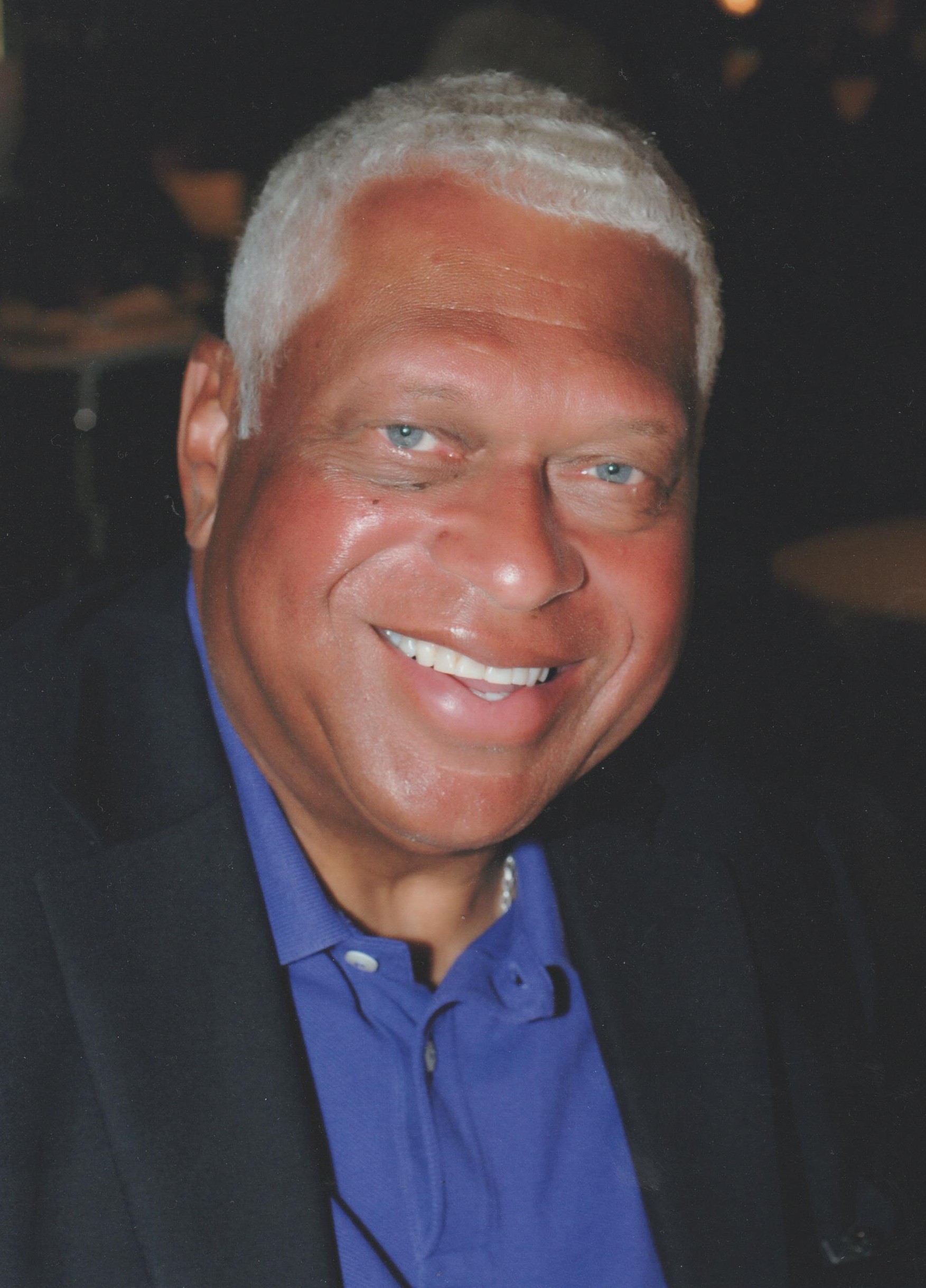
I was able to locate Herbert’s great-grandson Herbert (Herb) P. Tancil IV. In interviewing Herb, he was

Herbert Pike Tancil IV

able to tell me about his great-grandfather being the barber to a white clientele. Herb did not know that his great-grandfather’s clients were made up of wealthy businessmen and the City Mayor. In his great-grandfather’s life time, he was the barber to ten Mayors. Through Herbert’s barber shop business, he was able to purchase a home at 1012 Oronoco Street. He supported a wife and eight children and several of his children went to college. Two of Herbert’s children became medical doctors.

The barber business stayed in the family for two generations. Herbert P. Tancil and Herbert P. Tancil II were barbers in Alexandria. Herbert III broke away

from the family business and started working for the Federal government and the District of Columbia government. Also Herbert III like his father, Herbert II were devout Episcopalians. The first Herbert was a member of Alfred Street Baptist Church.

Herb fondly remembers his father’s strong devotion to his religion. Herbert III was called on to participate in the ceremonies of the Archbishop of Canterbury when the Archbishop visited the Washington, D.C. area. Herbert III also enjoyed his second career as a counselor for an orphanage in Washington, D.C. Herb IV said, “that if his father was walking down the street and saw five people, he would know three of the five people, and the other two would be his friends before they departed.” Herbert III was a people person. He loved to be around people and people loved to be around him.

His son, Herb IV has made his own mark on life by being the first Hartford Life Insurance Company’s African American Group Sales Manager in Detroit, Michigan. Herb was born in Alexandria, Virginia. While he was in high school, he excelled in track. He graduated from Groveton High School in 1966. Herb attended York Academy of Arts in York, Pennsylvania and National Academy of Arts in Washington, D.C. He earned a certificate as a commercial artist in 1968. He further his education at Howard University in Washington, D.C., graduating in 1972 with a degree in Fine Arts.

Today, Herb lives in Arizona with his wife, Marcia and his sons, Herbert P. Tancil V and Chad L. Tancil; and, their families including his grandson, Herbert P. Tancil VI.

The very first Herbert P. Tancil would have been very pleased that his name meant so much to his family, that his name has been carried down six-generations.

In ending, my elders used to say, you have nothing to stand on but your name. So do not disgrace yourself because you will be disgracing the family’s name. The Tancil family has a strong name to stand on.

Ferdinand T. Day – “A Champion of Champions”

Behind the scene of the Alexandria Gazette story on Mr. Ferdinand T. Day dated February 8, 2018.

Prior to 2009, I made weekly visits to the Alexandria Black History Museum (ABHM). In my weekly visits to the ABHM, I saw Mr. Ferdinand Day. Unlike many Alexandrians, I did not know Mr. Day. I am a first generation Alexandrian; and, the history of Alexandria was never highlighted in the City School system in 1960s and 1970s. So seeing and hearing about

Ferdinand T. Day
1918 – 2015

Mr. Day and his contribution to the City of Alexandria made me wanted to know more about him. I inquired about Mr. Day in the community; and, I asked the Director of the ABHM to introduce me to Mr. Day. After arrangements were made for me to meet with Mr. Day and his daughter, our friendship grew. Those years with Mr. Day were precious years. He was the professor and I was the student. The knowledge that I gained from my visits with him will last me a life time.

For about three years, we spent six to eight hours a month, talking about the history of Alexandria and all of the people that he knew throughout his life. Somehow, I felt that he was preparing me for a journey that I will soon take. What is obvious to me now, the journey that Mr. Day guided me through, was to tell the story of Alexandria’s African Americans in the context of the history of Alexandria. This was indeed a rare opportunity to sit at the table and learn from a man who had spent his life in making his beloved City a better place.

For Mr. Day’s family history in Alexandria, it started with his grandfather, George Day. George was born in Culpeper, Virginia in 1850. He and his brother, Taylor Day, were living in Culpeper in 1870. After 1870, George Day migrated to Prince William, Virginia where he married his first wife, Lucretia Robinson, on 14 October 1873. On his marriage license, he stated that his parents were Robert Day and Rosetta (Rose) Day. By 1880, George and his brother, Taylor, were living in Alexandria on Gibbon Street. On 24 December 1886, George married his second wife, Mary J. E. Vaughn. He and his wife had the following children: Edmonia V., Ferdinand T., Robert W. Jr., Emma, and Rose M.

Robert W. Day was Ferdinand T. Day’s father. Ferdinand was named after his uncle, Ferdinand. Robert W. Day married Victorine Johnson. They had the following children: Lawrence D., Quentin B., Robert W., Ferdinand T., George W., Mary V., and Clarence.

Mr. Ferdinand T. Day’s brother, Robert, was named after his father Robert. Robert Jr., gave up his seat at Armstrong High School so that Ferdinand could attend. Robert late enlisted in the military and served during World War II. He died 7 March 1966 at the age of 48.

Ferdinand T. Day married Lucille Peatross. They had one daughter, Gwen Day.

Prior to Mr. Day getting married, he lived at 402½ South Royal Street. His childhood was made up of family, friends, neighbors, teachers, and clergymen. Those people were the main focus of our monthly talks. He enjoyed talking about his childhood and his community activism. Although he came from humble beginnings, he really enjoyed his life and the people of his beloved City.

Déjà vu – Alexandria African American Historic Housing Problems

Some problems never go away, the problem of housing in Alexandria is just one of those big problems. Looking back in time, we can see how these housing problems have impacted so many people especially African Americans and the poor.

In the early 20th century, the United States entered into World War I. By 1940s, the United States entered into World War II. Each of these wars brought more opportunities for the African Americans in Alexandria. The wars increased the demand for workers in the factories, the military, and in the Federal government. Along with these demands were the realization that Alexandria had a serious housing shortage. Many African Americans that were living in the City of Alexandria during this period of time lived in poor housing. Many of these homes were built during the 19th century without inside toilets and running water.

With the Federal Government Housing subsidies, affordable and public housing construction dominated the 1940s in Alexandria. During this construction boom in the 1940s, the country was experiencing “Jim Crow Laws,” which met separate but equal in name only, among the races. In order to build public housing in the African American communities, many of their homes were condemn and demolition.

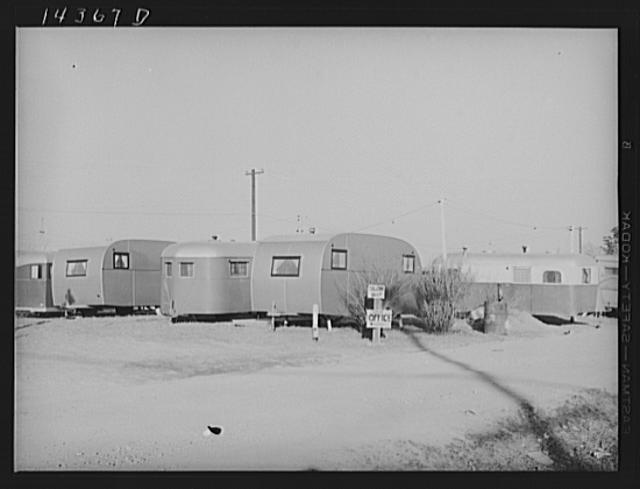
These African Americans were placed in temporary trailers.

1941 Trailer – Alexandria, VA

A family of six would be placed in two trailers. The parents would be in one trailer and the children would be in another trailer. Some families lived in the trailers between six to fifteen months. The condition that they lived in was horrible. The trailers did not have inside toilets nor showers. Designated trailers were used for showers. Toilet facilities were located in an outhouse building. These facilities were used by everyone who was living in the trailer camp. Parents feared for their children safety, especially for the girls and women.

Memories of this period of time are sketched into the brains of many of the elderly African Americans who lived through this transition period. Their families were put into the trailers until public housing became available.

Two families were interviewed about their life living in the trailer camp. Mr. John Taylor remembers that his dad would not take a shower nor use the bathroom in the trailer camp. “My father would walk to his parents’ house at 214 North Payne Street to shower and use the bathroom. It was really bad in the trailer camp.” Their trailers were on First Street in Alexandria.

Mrs. Charlene Napper, the sister of Mr. John Taylor, remembered that she was a little girl around seven or eight-years-old when they moved to the trailer camp. They had two trailers assigned to them. She also remembered when the family moved out to the newly built public housing at 1005 Madison Street. “Our family did not stay long in public

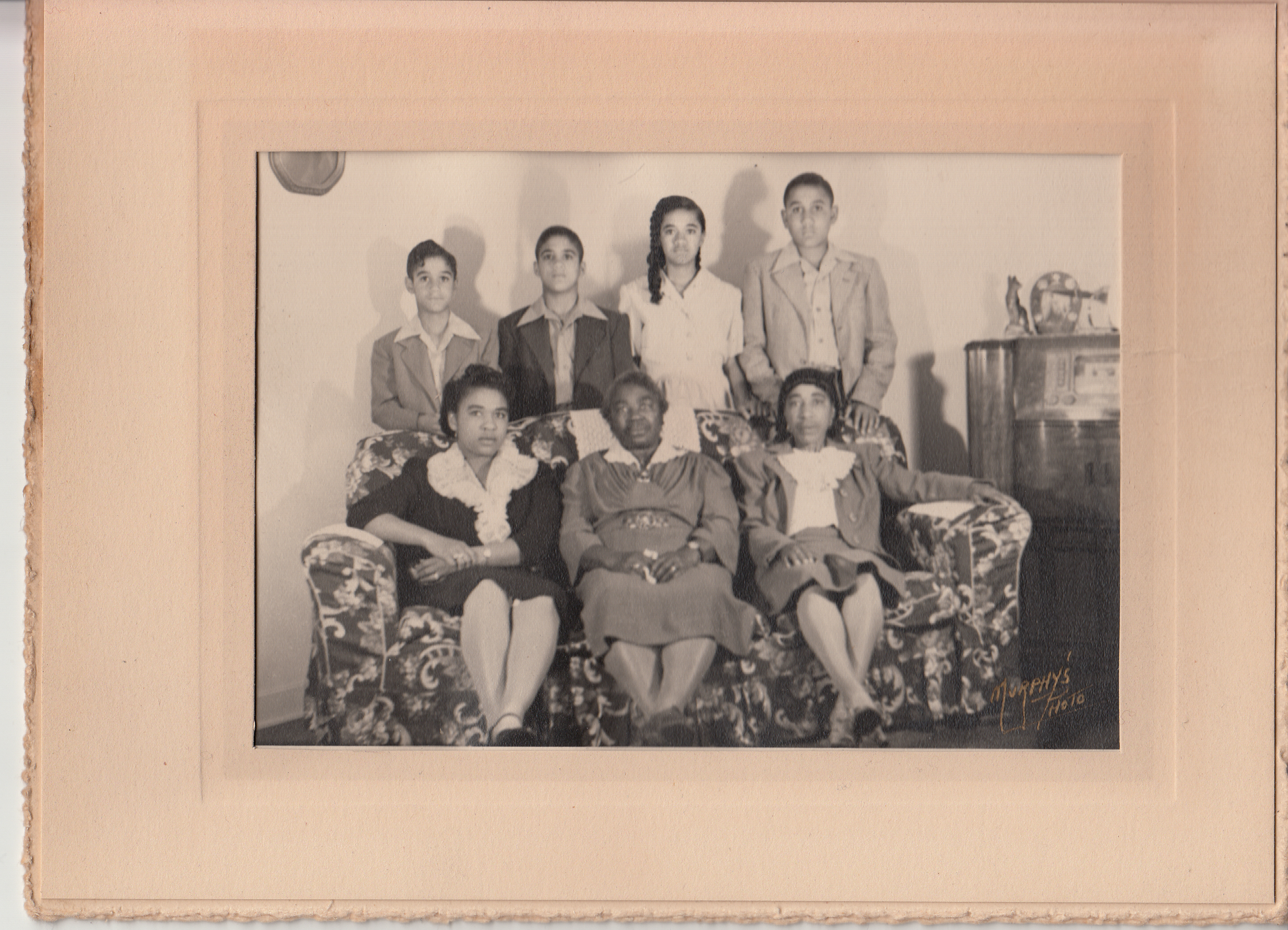
First row: Mrs. Dorothy Knapper-Taylor and her grandmother and her mother – Second roll: Mrs. Dorothy’s children – they all are in the new home on North Payne Street

housing, because my parents were told by the housing authority that my oldest brother would have to move out when he turned eighteen.” Ms. Charlene told me that her father’s employer helped them to purchase a home so that their family could stay together. Today Mrs. Charlene lives in the family home on North Alfred Street. The family has owned this house for seventy-plus years.

Mr. James Beatty’s family also lived in the trailer camps on First Street in Alexandria in the 1940s. Two trailers were assigned to his family as well. After they were relocated to public housing on St. Asaph Street, Mr. Beatty’s father started saving his money and making plans to relocate his family. The opportunities for African Americans to buy their own property in Alexandria was bleak, so Mr. Beatty’s family moved to Washington, DC.

After public housing was built, many African Americans in Alexandria were not eligible for those houses. Their incomes were not low enough to qualify; and, with the segregation laws in place, they couldn’t rent nor buy in the white communities in Alexandria. So, like

Mr. James Beatty

Mr. Beatty’s family, they migrated to Washington, DC and left so many friends and family members behind.

Again, Alexandria is experiencing a demand in housing. And just like the 1940s, again African American families are at risk for affordable housing. But unlike the 1940s, many will not be moving to Washington, DC, because DC has their own shortages of affordable housing.

So, if you live long enough, you will have your Déjà vu moment; and, affordable housing in Alexandria is truly a Déjà vu moment.